

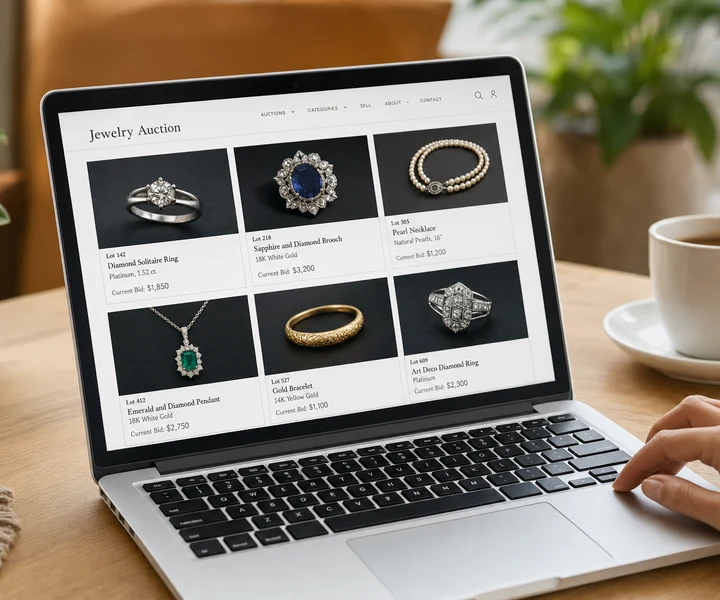
Jewelry auctions are scattered across house websites, multi-house bidding platforms, and search catalogs that index lots from many sales. Finding a piece is mostly a search problem. Buying it is not: registration, bidding, and payment stay with the auction house named on the official listing.
Quick Answer
Search in three places: auction house sites, multi-house bidding platforms, and aggregators or listing catalogs that index lots for research. Use a short brief (category, maker, budget, shipping limits) before you filter. Open the official house listing before you register or bid. Aggregators help you discover lots; they are not usually the seller. Factor in sale location, shipping, and fees when a “find” is abroad.
1.Finding sales vs finding a single lot
Online discovery usually follows two paths.
One path is the sale calendar: upcoming jewelry auctions by date, house, and city. You browse a whole catalog once it is published, often a week or more before the sale.
The other path is lot search: you look for a maker, stone, or period across many sales at once. That is faster when you already know what you want, and weaker when catalogs are incomplete or late.
Most buyers use both. Calendars catch specialist sales you would not search by keyword. Lot search catches a signed ring buried in a mixed decorative-arts auction.
Key point
A good find is a lot you can bid on: official listing, time to register, and a total cost you can afford after fees and shipping.
2.Three places lots appear online
The same lot can show up in more than one place. What matters is which site is only for research and which site takes your bid.
Auction house websites
The house that runs the sale publishes the catalog, conditions of sale, and bidder registration. Majors and regional specialists both belong here.
Multi-house bidding platforms
Third-party sites that list sales from many houses in one place. You may bid through the platform, but the house still runs the sale and sets the rules.
Aggregators and listing catalogs
Search indexes that collect upcoming and past jewelry lots from many houses. Useful for discovery and comps. Bidding and payment happen at the house, not on the research page.
How Jewelry Auctions Work covers why that split matters once you are ready to bid.
3.Start with what you want
Blank search boxes return noise. Write a short brief first, even if it only sits in a note on your phone.
You will loosen the brief when a category is thin. Starting tight keeps the first hour of searching useful.
- Category: ring, bracelet, brooch, necklace, earrings, or set
- Period or style: Art Deco, Victorian, contemporary, and so on
- Maker or retailer when known (Cartier, Tiffany, unsigned fine)
- Main gem or material: diamond, sapphire, platinum, yellow gold
- All-in budget band after buyer’s premium and likely shipping
- Where you will accept delivery from (domestic only, EU, worldwide)
4.Search tactics that work
Use the brief as keywords and filters, then widen one dimension at a time.
On house sites, open the jewelry or fine jewelry department and the upcoming sales list. On platforms and aggregators, filter to jewelry, upcoming (not only past results), and an estimate or price band close to your budget.
Maker name plus “auction” in a general search engine still works for signed pieces, but always land on the official lot page before you chase a bid.
- Search maker or model names before vague terms like “gold ring”
- Toggle upcoming vs past results so comps do not hide live lots
- Sort by sale date when you need time to register or arrange shipping quotes
- Save searches or set alerts when the site offers them for makers you follow
- If filters return almost nothing, drop period or brand first, not category
5.Reading a search result
Every useful result should answer the same checklist before you invest time in photos and condition notes.
Key point
If you cannot name the auction house and open its lot page, you do not have a bid-ready find yet.
6.Major houses vs regional specialists
International houses publish deep catalogs, strong photography, and frequent jewelry sales. They are easy to find and often competitive on famous makers.
Regional and specialist houses can be stronger for local estate jewelry, mid-market signed pieces, or categories the majors underweight. Catalogs may be shorter, but depth in one niche can be better.
There is no fixed “best house” list. Check sale history in your category, clarity of conditions of sale, shipping policy, and how early the jewelry lots are posted online.
When you compare past results across houses, keep fees and buyer pools in mind. How to Compare Jewelry Auction Results covers that workflow.
7.Trust and legitimacy checks
Most jewelry auction listings you will see from established houses and platforms are ordinary commerce. Still run a short check before you share ID or card details for bidder approval.
- Confirm the house name matches a real firm with an official site and published conditions of sale
- Registration and payment instructions should sit on the house or its named bidding platform
- Lot photos and descriptions should be consistent across the house page and any aggregator card
- Be wary of pages that only republish text and ask you to pay somewhere unrelated to the house
- Read shipping, export, and buyer’s premium terms before you treat the estimate as affordable
8.International lots
A strong lot abroad is only a good find if you can clear shipping, tax, and timing.
Ask or read about packing, insurance, and who arranges export. Import VAT, duties, and broker fees can sit on top of hammer and premium. Currency conversion and live-sale time zones also change how you watch a lot.
If you will not ship cross-border, filter by location early so you do not fall for estimates that ignore logistics.
Key point
All-in cost includes premium, tax, shipping, and import charges, not only the hammer you saw in search.
9.From discovery to action
Once a lot survives your checklist, move off the search results page.
Open the official auction house listing. Create or update your bidder account there (or on the platform that house uses). Register early; approval can take time. Set a maximum total that includes buyer’s premium, then work back to a hammer cap.
Buyer’s Premium Explained and How Jewelry Auctions Work cover the fee and bidding steps in detail.
Key point
Use listing sites and aggregators to research. Register, bid, and pay with the auction house.
10.Common mistakes
- Trying to check out on a research or mirror page instead of registering with the house
- Ignoring sale location until after you win
- Watching only a few major houses and missing specialist jewelry sales
- Treating marketplace “Buy now” jewelry sites as the same as auctions
- Leaving bidder registration until the hour before the lot closes
- Comparing hammers across countries without shipping and tax
- Saving past-result comps and forgetting to switch filters back to upcoming lots